Amazon's $5 Million Exit: The Price of Abandoning Four Data Centers in Loudoun
After significant local resistance, Amazon is converting a planned 122-acre data center site in Northern Virginia into residential and community spaces, including a $5 million housing contribution.
By Benjamin Rousseau ·
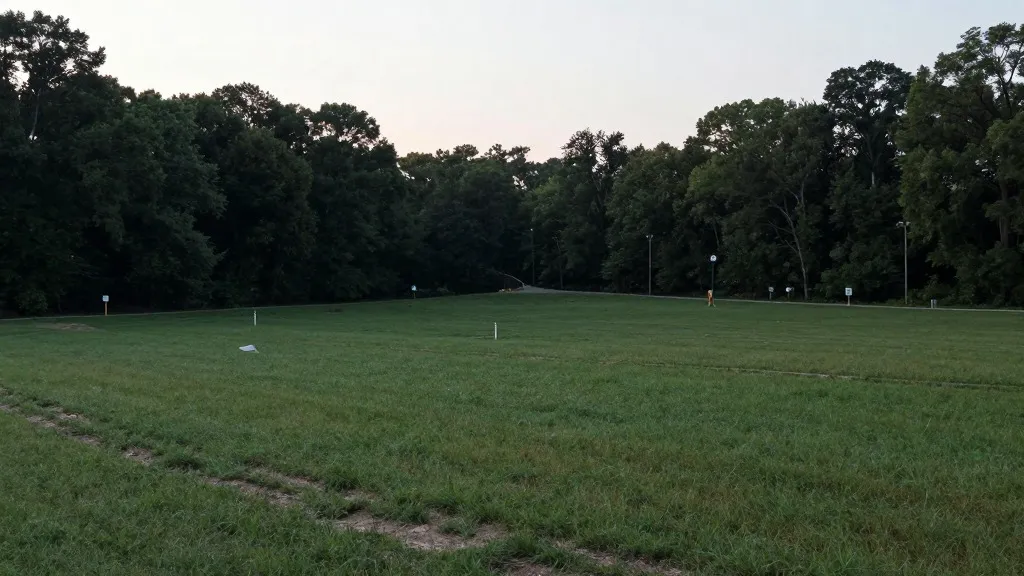
Amazon has formally withdrawn its proposal to construct four new data centers on a 122-acre parcel in Loudoun County, a decision that includes a $5 million contribution to the local housing fund and the donation of 25 acres for public use. The shift marks a definitive end to a plan that would have added significant computational infrastructure to an area already saturated with such facilities. Instead of server halls, the majority of the land will now be developed for mixed-use and residential purposes, while the donated acres are designated for a community arts center and recreational facilities.
The decision follows a period of intense scrutiny in Loudoun County, often referred to as "Data Center Alley" due to its high density of infrastructure. Amazon originally submitted the proposal in July 2026. By September, tensions had risen between the company and local officials, with Board of Supervisors Chair Phyllis J. Randall meeting with Amazon representatives to discuss the project's fit within the community. The core issues were the significant power demands of the facilities and the noise they would generate, concerns that had increasingly shaped the county’s approach to new buildouts.
Josh Weissman, Amazon’s vice president for data center development, acknowledged that the company had initially been eager to acquire the former George Washington University campus when it became available. However, he noted that the company took the county’s "pointed concerns" into account during their deliberations. Weissman stated that while Amazon viewed the legal development potential of the site differently than the county did, they determined that a shared vision was preferable to "costly litigation." This diplomatic conclusion avoided a potential legal battle over the land’s intended use.
The broader context for this retreat involves the escalating demand for data storage and processing driven by artificial intelligence. As cloud services expand, the need for larger facilities has outpaced the capacity of many local grids. In response, local communities have become more vocal about the environmental and economic impacts, including spikes in electricity prices and water usage. Just days before this announcement, President Donald Trump urged data center developers and AI hyperscalers to pay local communities a dividend to offset energy costs. He further suggested that these facilities should generate their own power and sell any excess energy back to the grid, a move intended to address growing local frustrations.
Local officials have framed the outcome as a success of negotiation over confrontation. In a statement, Chair Randall emphasized that choosing "dialogue over reflexive disagreement" created a tangible opportunity for the county. She highlighted the new spaces for residents to gather and play, but placed particular emphasis on the housing component, noting that the agreement would provide "more attainable homes for working families." For a region struggling with high housing costs, this aspect of the deal appears to be the most politically significant.
Despite the official narrative of compromise, some observers question whether the trade-off fully addresses the underlying infrastructure limits of the region. The withdrawal removes a major power consumer from the grid, which is already under strain in Northern Virginia. Critics suggest that the swap of a data center project for luxury housing does not solve the regional energy deficit, but rather shifts the land use to a less power-intensive model. The $5 million housing fund, while substantial, is a fixed sum compared to the variable costs of ongoing energy consumption that the data centers would have incurred.
The next steps for the 122-acre site will involve rezoning and development planning to accommodate the mixed-use and residential goals. The 25-acre donation will require a separate development timeline for the arts center and recreational facilities. For Amazon, the decision avoids a protracted legal dispute and allows them to focus on other sites where community resistance may be lower. For Loudoun County, the deal provides immediate community benefits and a modest boost to the housing supply, though the long-term implications for the area’s energy grid and development trajectory remain subjects of local debate.
This development underscores the shifting dynamic between tech giants and local municipalities in Northern Virginia. As the demand for AI infrastructure continues to grow, the ability of companies to secure land and power is becoming increasingly contingent on local acceptance. The Loudoun case may serve as a precedent for other regions facing similar pressures, where the balance between technological expansion and community liveliness is being actively renegotiated.
Source: Tom's Hardware · original report published