FCC Chip Rule: First Bans Hit Dashcam, Transmitter
The agency blocked two consumer devices over a HiSilicon processor that carries a neural processing unit for AI functions.
By Amira Patel ·
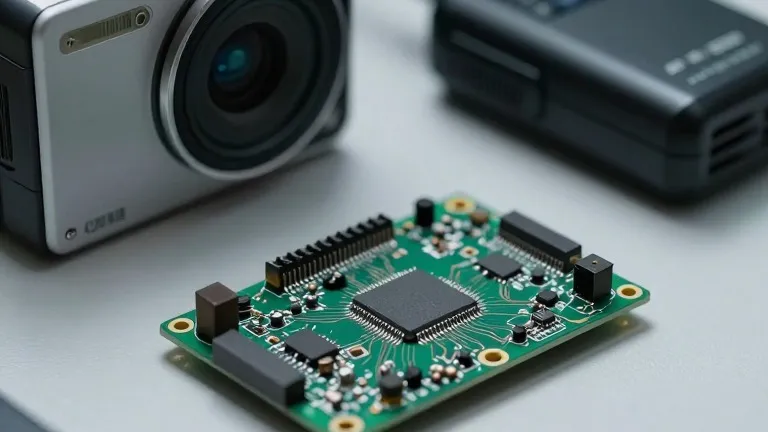
The Federal Communications Commission blocked a dashboard camera and a wireless video transmitter from sale and marketing in the United States on Thursday, the first enforcement actions under a rule the agency adopted to target the silicon inside a device rather than its brand name or model number. Both products were halted because each contains a HiSilicon Smart Vision system on a chip.
The processor in question is the Hi3516CV610 UHD Smart Vision, designed for surveillance and camera products including vehicle dashcams and wireless CCTV systems. It combines WiFi, Ethernet, video encoding hardware, an Arm Cortex-A7 processor, and a neural processing unit for AI functions. HiSilicon is a subsidiary of Huawei, and both companies appear on the FCC's Covered List of entities considered a risk to US national security.
The rule allows the agency to act when logic-bearing smart components made by Covered List entities are found inside a product, closing a gap in which rebranded items containing parts from Chinese manufacturers named on US export restriction lists could still reach store shelves. Because the action targets the chip itself, a ban does not have to be issued for each product or label separately.
According to the chip's data sheet, the Intelligent Video Engine runs on the neural processing unit and uses a built-in dedicated multimodal large model with transformer feature acceleration. The data sheet says this allows the AI to track relationships between objects across video frames, maintaining attention on pets, faces, human figures, and parcels. The FCC describes the same capability in more cautionary terms, stating the logic-bearing AI could be used to survey US citizens and log faces for foreign surveillance.
Huawei has faced prior scrutiny over AI chips. The company used shell companies to have TSMC manufacture AI chips despite a US request that TSMC stop supplying a list of Chinese customers. That episode is one of several Huawei controversies that have led to other product bans in the United States.
Reader comments on the original report were mixed. Some called the move protectionism or questioned whether American surveillance differs from foreign surveillance. Others asked whether the FCC's authority covers only wireless devices; one commenter noted the Communications Act of 1934 directs the FCC to protect both wired and wireless interstate and international communications. Another argued bans should have been based on silicon from the start, given how many revisions and regional variants a single product can have.
Source: Tom's Hardware