Kyiv death toll hits 140 as residents sleep in metro stations
A shortage of shelters has forced millions of people into subway stations while Russian strikes intensified across the capital.
By Benjamin Rousseau ·
Russian military strikes on Kyiv have killed 140 people in the first eight months of 2026. This figure approaches the 172 deaths recorded for the entire previous year. The capital's military administration released the data as attacks on the city intensified.
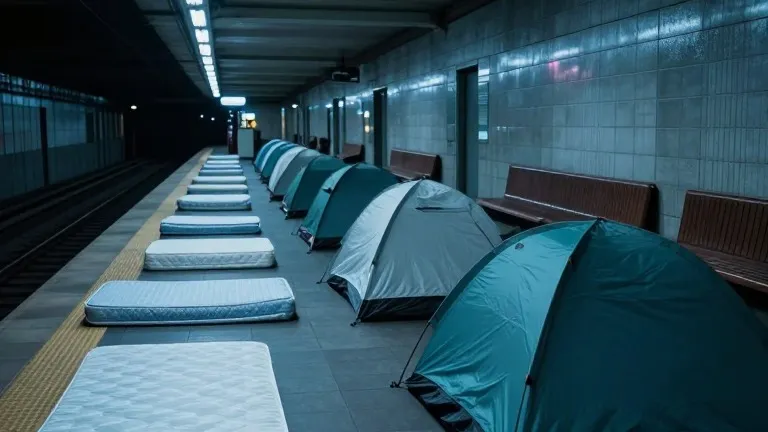
A lack of adequate shelter space has pushed approximately 4 million residents into subway stations at night. Many residents lay out mattresses and set up small tents from 10 p.m. onward. Children and pets sleep on the cold floors of the underground stations.
Halyna, a resident of the Lukyanivka district, told reporters that she takes her five-year-old son, Roman, to the nearest station most evenings. She described the situation as being alive and lucky again. Her district has been a repeated target during the four-year conflict.
Strikes have hit residential buildings and schools. In September, a drone struck an apartment in the Pechersk district, killing 14-year-old Daniel Umanskyj while he did homework. A neighbor, Vlad, was in the hallway with his daughter at the time of the explosion. He said the delay in their arrival saved their lives.
Schools continue to operate in person when possible. Valentyna Chorna, a principal in southwestern Kyiv, said her school kept classes running because its shelter holds more than 500 students. Pupils in grades one through nine attend daily. Attendance depends on the duration of air raid sirens and shelter availability.
Parents face logistical challenges when alarms sound during school hours. One reporter's daughter attends school near the Antonov aircraft factory. Her family was forced to shelter in a building that sustained damage from a drone strike in September. The apartment itself remained undamaged.
Infrastructure damage has created shortages in supermarkets and emergency power outages. A Russian attack at the end of September paralyzed the subway system. The city faces uncertainty regarding its ability to provide heat, electricity, and water during the upcoming winter.
A survey by the Kyiv International Institute of Sociology found that 72% of residents said in September they were prepared to endure the war. Authorities shortened the daily curfew to 1 a.m. to 5 a.m. They also allowed some facilities to operate during yellow alerts, while red alerts require immediate shelter.
Source: Deutsche Welle