Resolve Marine Group finishes mast removal from SS Richard Montgomery
Crews removed three deteriorating masts from the WWII shipwreck at a cost of just under $13 million, leaving 1,500 tons of explosives on the Thames bed.
By Amira Patel ·
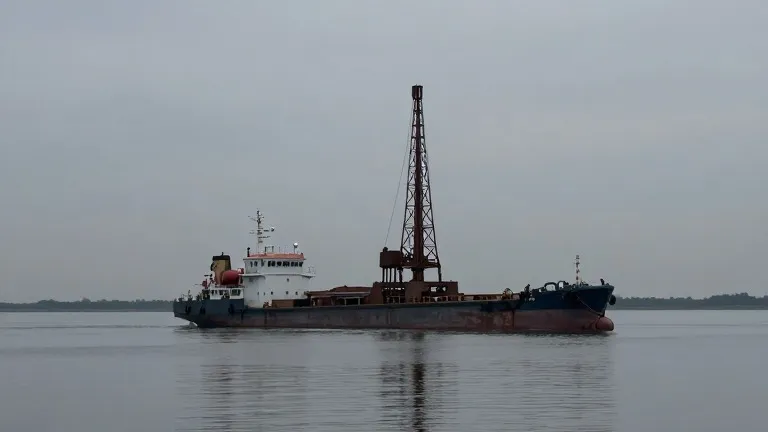
Officials confirmed the completion of a multi-year engineering project to stabilize the SS Richard Montgomery, a World War II vessel stranded in the Thames Estuary. The operation focused on eliminating a specific structural threat to the wreck, which still contains a massive cache of munitions.
The primary objective was to remove the three rusting masts that protruded from the water. These structures had been a fixed landmark for local traffic and residents since the ship sank in 1944. Recent assessments indicated that the masts were deteriorating and posed a risk of collapsing onto the cargo below.
Nolan Conway, a naval architect with Resolve Marine Group, explained that the vessel had begun to lean, increasing the danger that the masts could fall and strike the explosives. He noted that some of the cargo is believed to be equipped with pressure fuses, meaning a physical impact could trigger a detonation.
The team executed the removal using a custom-built lifting frame designed to raise each mast vertically without swaying. To sever the masts from the hull, engineers deployed a remotely operated underwater diamond-wire saw. This device clamps around the mast with hydraulic arms, allowing the cutting process to occur without divers entering the water.
Keir Mather, the U.K. maritime minister, addressed the House of Commons to report on the project's status. He stated that the work was finished ahead of schedule and within the allocated budget. The total cost for removing all three masts was just under $13 million.
Mather described the masts as placing a heavy load on the ship's structure. Their removal reduces the structural stress on the wreck, which supports the long-term management of the site. The government maintains that the project addresses an immediate engineering concern rather than the underlying risk of the cargo.
The 1,500 tons of explosives remain in the cargo holds. Removing them is considered far more hazardous than leaving them in place. Experts disagree on the potential consequences of a detonation, with estimates ranging from minor shoreline damage to a tidal wave moving up the Thames. Conway acknowledged the wide range of possible impacts but noted that none are ideal.
Despite the uncertainty, officials continue to assess the overall probability of an explosion as low. The wreck remains subject to a strict exclusion zone, located approximately 1.5 miles off the coast of Sheerness. Mather confirmed that the area will remain under continuous monitoring and control.
The removed masts have been transported to the Historic Dockyard Chatham museum. They will be preserved and displayed to recognize the ship's role in the Allied war effort. The SS Richard Montgomery, which carried munitions for the period following the D-Day landings, now sits entirely below the waterline.
Source: CBS News