32,000 Detained in Myanmar as UN Investigator Links Arms Buys to Civilian Attacks
The UN special rapporteur on Myanmar said military purchases from China and Russia are funding the conflict while more than 15,000 political prisoners remain jailed.
By Benjamin Rousseau ·
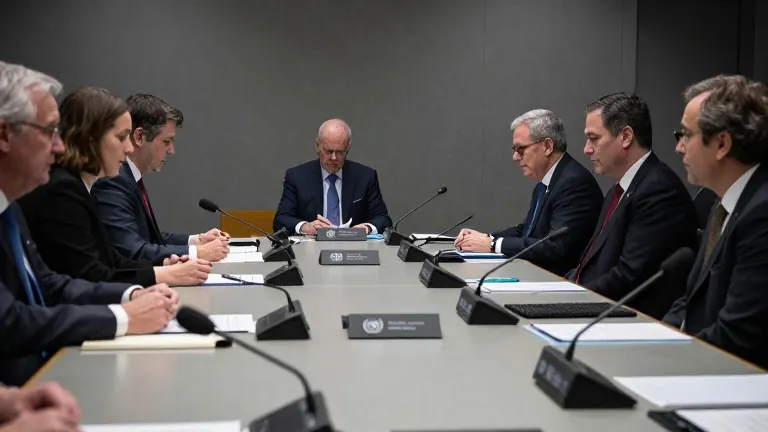
Myanmar's military government is deliberately targeting civilians to force submission while its weapons purchases sustain a conflict that has emptied the legal economy, a United Nations investigator told reporters Thursday.
Kelley Currie, the Human Rights Council's special rapporteur on human rights in Myanmar, said the government's increasing arms deals with China, Russia and other countries are bankrolling the war and what she called a "catastrophic" human rights situation. She criticized governments for engaging the administration without demanding concessions such as reduced violence, releases for political prisoners, or dialogue with all parties. Members of the Association of Southeast Asian Nations, which criticized the military for its 2021 seizure of power from elected leader Aung San Suu Kyi, have recently moved toward warmer relations with the government.
The February 2021 takeover by the military, which ousted the elected government, triggered pro-democracy protests that were suppressed and gave rise to armed resistance across much of the country. The government's forces hold an advantage in arms and manpower and have used air power from Chinese and Russian aircraft without challenge, but have not defeated their opponents. Currie said the legal economy has contracted and illicit activity has expanded since the takeover, which she attributed to government mismanagement. She said the administration raises money through currency arbitrage, demands shares from companies, and requires kickbacks from farmers through the food and agriculture supply chain. "When military officers generally try to run an economy, they don't do a very good job," she said. "In Myanmar, they're spectacularly bad at it." She said those funds purchase military equipment and have upgraded surveillance and policing capabilities in the territory the government controls, about half the country.
Currie also raised concerns about possible violence if the International Court of Justice rules that the military committed genocide or failed to prevent it in its 2017 crackdown on the Muslim Rohingya minority. She said groups that spread hate speech against non-Buddhist, non-Bamar minorities, including the Rohingya, are becoming more active online and in political spaces under the regime's control. "I see this as a prelude to potential violence following the ICJ decision," she said. Nick Koumjian, head of the United Nations Independent Investigative Mechanism for Myanmar, said he saw reports that judges wanted to rule this year, with October mentioned. "We expect that the court will give some notice about when it would deliver the judgments, and we're hoping it will be soon," he said.
The Assistance Association for Political Prisoners, an independent watchdog group, reports that more than 32,000 people have been detained since the 2021 takeover, including Suu Kyi, and at least 15,000 remain behind bars.
Grant Peck of the Associated Press reported from Bangkok.
Source: ABC News