Russia tests Europe with drones and ship attacks
European officials report rising incidents from airspace breaches to cargo ship sinkings near Bulgaria, raising alarms about a widening conflict.
By Michael Lombardi ·
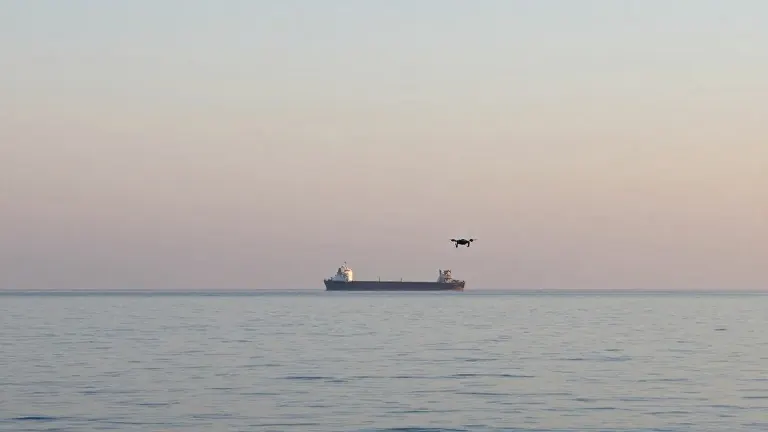
Ordinary Europeans face new security risks as Russian activity intensifies near their borders. In October, Ukraine accused Russia of using drones to sink four cargo ships just outside Bulgarian territorial waters. This event signals a direct threat to grain exports moving through NATO waters. European officials say these actions are part of a larger pattern designed to test how quickly and firmly the alliance responds.
The escalation has built steadily since August. A verified Russian operation targeted cargo planes at Germany's Leipzig/Halle Airport. In September, Czech intelligence chief Michal Koudelka warned that a direct military attack on a NATO member could occur within months. Later that month, Russian Foreign Ministry spokesperson Maria Zakharova declared that European defense industries supplying Ukraine were legitimate targets. This month, five EU intelligence agencies told the Financial Times that Russia aims to disrupt supply chains and target defense executives.
Recent incidents highlight the physical reach of these operations. European officials allege Russian fighter planes have entered Polish, Lithuanian, and Estonian airspace. Suspected drones were downed over Poland, Finland, and the Baltic states. In Latvia, Ieva Cesniece, the country's ambassador to Greece, described masked individuals on the Belarusian border pushing migrants into Latvian territory. She said these groups threatened border guards and damaged surveillance equipment. Latvian media report that Belarusian authorities rounded up asylum seekers who tried to flee back and forced them toward Latvia again.
Experts argue that current defenses are insufficient. Olena Tregub, head of Ukraine's Independent Anti-Corruption Commission, stated that deterrence requires convincing Russia that its operations are too costly. She noted that European governments have not done enough to expose command structures or disrupt financing. Minna Alander of the Center for European Policy Analysis suggested immediate retaliations such as denying Russian travel visas and conducting cyberattacks. Oleksandr Danylyuk of the Royal United Services Institute proposed that every detected Russian intelligence operation in Europe should trigger a 10 or 20 percent increase in support for Ukraine.
The financial stakes are high. Ukrainian President Volodymyr Zelenskyy told the European Council on October 16 that the war will cost 155 billion euros next year. He requested at least 70 billion euros in additional funding from Europe. Zelenskyy said this money could allow Ukraine to double or triple its drone production. He questioned why Europe does not react more loudly to current drone tests, warning that the response will be much louder when ballistic missiles are involved.
Ukraine has maintained a strong defensive posture despite reduced US support since January 2025. The country has developed its own weapons and struck deep into Russian territory to damage oil installations and factories. Two counteroffensives have halted Russian gains in the Donetsk region. However, political pressure in France and Germany is mounting, with opposition leaders calling for a pause in aid. Ukraine continues to ask Europe to cover the majority of the war's financial burden.
The next major step involves European governments deciding how to respond to the latest ship sinkings. Officials are working to strengthen the resilience of data centers and telecommunications networks. They have not yet announced a plan for direct retaliation. The focus remains on protecting critical infrastructure while intelligence services continue to track Russian networks.
Source: Al Jazeera