Blue Planet III: BBC Says Series Contains No AI-Generated Frames
The new nature series premieres on November 1, retaining cloudy footage to demonstrate its authenticity.
By Amira Patel ·
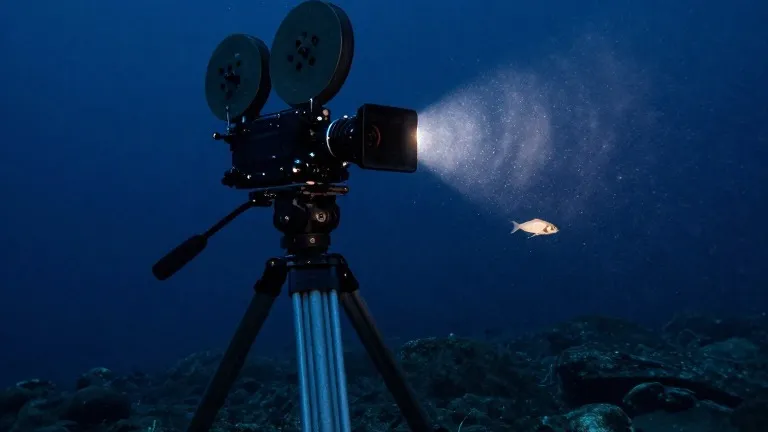
BBC Studios executives state that no artificial intelligence was used in the creation of the upcoming documentary Blue Planet III. At a press screening, Jack Bootle, the head of specialist factual commissioning, addressed questions regarding the use of generative technology. "No gen AI was used in this series. Not a single frame. It's all real photography," Bootle said. The statement follows concerns that audiences might assume manipulated content.
The production team has made deliberate editorial choices to prove the footage is authentic. Elizabeth White, the executive producer, said the series retains water containing plankton or suspended material that earlier productions might have discarded. Shots framing out boats or buoys were also kept in the final edit. "We're really leaning into that authenticity," White said. She expects future productions to use even cloudier imagery to distinguish real recordings from AI-generated visuals.
White noted that artificial intelligence 'makes us want to be even more authentic.' She stated that animals in the deep ocean are 'probably more remarkable than AI could imagine and it's completely real'. The series features dolphins using sea sponges to block holes in coral to trap fish. Other scenes show a grouper communicating with other fish, 200,000 crabs feeding in formation, and sea urchins using shells for cover.
Production for the series ran for four years across five oceans. Series producer Lara Bickerton said the unit 'continually innovated' during the shoot. Crews constructed a 'mini-dome' camera to follow an octopus and developed a 'deep-sea selfie stick'. Camera operators wore leg-mounted scooters to capture diving footage. Lasers were deployed to film animals in deep water. The production also utilized an underwater CCTV camera nicknamed the 'stonefish' cam.
The series includes content regarding threats to the ocean as well as its resilience. One segment shows how warmer seas caused by the climate crisis are killing the sea anemones where clownfish live. The programme also covers pollutants and forever chemicals. Filming for the project took four years across five oceans.
Filming involved David Attenborough, who is 100 years old. Bosiger said Attenborough was 'very much involved' and made changes to scripts. White said he retains his curiosity and remains excited when shown new footage. Regarding the BBC's £500m cost-cutting drive, White said she could not comment on potential effects on the unit's reputation. She noted the series saved money by using more local crews on location than previous productions.
Blue Planet III begins on Sunday 1 November on BBC1 and iPlayer. The series arrives almost ten years after Blue Planet II and 25 years after the original Blue Planet broadcast.
Source: The Guardian