Musk Disputes Panel's 22-Flight Lunar Fuel Estimate
SpaceX chief argues eight tankers will suffice for the 2028 Moon mission, contradicting a safety advisory board.
By Michael Lombardi ·
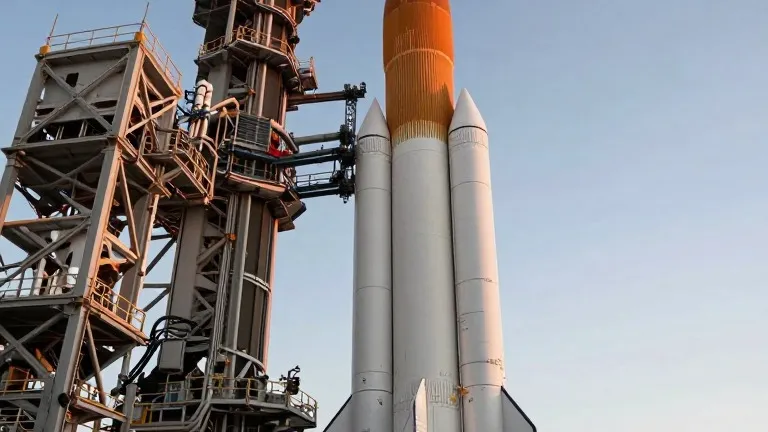
Elon Musk rejected a safety panel's projection that 22 rocket launches are required to fuel the 2028 lunar landing, claiming the actual number will be far lower. The disagreement followed a quarterly meeting of the Aerospace Safety Advisory Panel where members assessed risks for the Artemis IV mission.
Charlie Precourt, a former NASA astronaut and panel member, identified the refueling process for SpaceX's lunar lander as a primary hazard. Precourt stated that the most recent estimate for the required fueling flights stands at 22. He urged the public to monitor the numerous refueling operations needed to complete the mission.
Musk responded to the remark after Ars Technica's Eric Berger shared the quote on X. Musk described the panel's figure as "way too high" and asserted the actual number would be closer to six or eight. The dispute centers on the logistics of using Starship, a vehicle that consumes nearly all its propellant reaching Earth orbit.
SpaceX plans to build an orbital fuel depot to solve this limitation. A tank version of Starship launches first, followed by tanker vehicles that dock and transfer propellant. Once the depot is full, the lunar lander departs for the Moon. Each tanker flight represents a full rocket launch, adding time, cost, and risk to the program.
Berger calculated that filling a depot to the panel's 22-flight level would take approximately three months, even if SpaceX achieves two launches per week by late 2027. The discrepancy between the two estimates relies on assumptions about propellant delivery and boil-off losses in orbit.
NASA appears to base its count on current Starship capabilities, while Musk's lower range assumes a more capable vehicle. Musk has previously challenged higher counts, calling a 16-launch estimate "extremely unlikely" in 2021. The final figure will depend on the performance of SpaceX's upgraded V3 Starship, which has not yet fully demonstrated its refueling capabilities.
Source: Teslarati