NASA Allocates Three Rockets for 14-Day Lunar Lander Trial
The agency detailed a complex orbital campaign to test Blue Origin and SpaceX landers before the 2028 crewed landing.
By Michael Lombardi ·
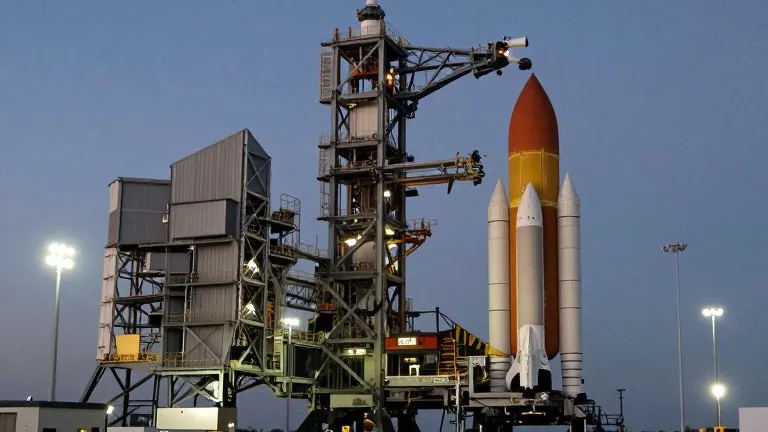
NASA is dedicating three separate rocket launches to a 14-day orbital test of two commercial lunar landers. The agency presented the detailed operations plan on October 23 at a press conference in Florida. Program manager Jeremy Parsons described the sequence as likely the most complicated launch campaign in history. The test is a prerequisite for the Artemis IV mission, which aims to land astronauts on the moon in 2028.
The campaign begins with Blue Origin’s New Glenn rocket launching the Blue Moon lander into low Earth orbit. NASA’s Space Launch System follows, carrying four astronauts to a highly elliptical orbit. The crew consists of NASA astronauts Randy Bresnik, Andre Douglas, and Frank Rubio, and European Space Agency astronaut Luca Parmitano. SLS places the Orion capsule in an orbit ranging from 18 miles to 1,122 miles above Earth. The capsule then raises its orbit to 345 miles to manage thermal stress in low Earth orbit.
Orion and Blue Moon rendezvous on Flight Day 3 at an altitude of 273 miles. The crew spends two days docked, entering the lander to check environmental controls and life support systems. They will also test emergency scenarios and dual-vehicle control capabilities. On Flight Day 6, SpaceX’s Starship launches with a docking adapter. The 171-foot upper stage meets Orion on Flight Day 8. The crew will not enter Starship but will collect data on docking forces during the two-hour encounter.
Orion undocks from Starship and continues the mission for another six to nine days. The total duration is nominal at 14 days but may extend to 17. The crew will evaluate survival suits, a task missed during the April Artemis II flyby, and conduct health assessments. The mission concludes with a parachute-aided splashdown in the ocean.
NASA Administrator Jared Isaacman stated the agency is preserving options for both landing partners. He noted that the data and schedule will determine which lander flies the 2028 mission. Profiles differ between providers. Blue Origin’s plan involves Orion meeting the lander in lunar orbit. SpaceX’s plan likely involves Starship docking with Orion in Earth orbit to propel the crew toward the moon.
The launch date for Artemis III is currently targeted for summer next year. Isaacman told employees in a recent memo that the mission is approximately 90 days behind schedule. Parsons identified the lunar lander supply chain as a primary challenge. Both providers are planning lunar landing missions for 2028. Isaacman said the agency is moving with real speed and purpose to resolve these issues.
The test validates the hardware and procedures needed for the first crewed lunar landing since Apollo 17 in 1972. NASA has not yet selected which commercial partner will support the 2028 crewed mission. The decision depends on the results of this 14-day orbital trial.
Source: Space.com