NHTSA Proposes Cyan Lights to Identify Driverless Vehicles
Federal regulators suggest a specific blue-green hue to distinguish autonomous vehicles from traditional traffic, aiming to create a unified visual language for self-driving cars.
By Benjamin Rousseau ·
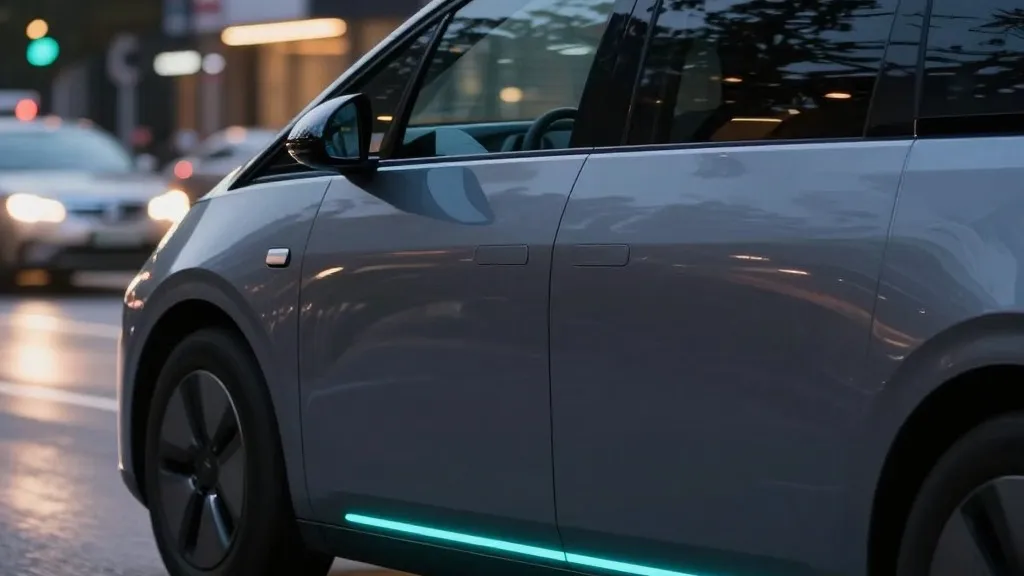
The Federal Motor Vehicle Safety Standard 108, which has governed automotive lighting for decades, is facing a significant revision that centers on a single color: cyan. The National Highway Traffic Safety Administration is proposing that driverless vehicles use distinct blue-green marker lamps to signal to other road users and law enforcement that an automated driving system is in control. This specific hue was selected to fill a visual gap in the current traffic system, where red, amber, white, and flashing blue or red lights are already reserved for brakes, turn signals, headlights, and emergency vehicles.
This regulatory move follows years of industry debate over how best to communicate the absence of a human driver. Previous concepts included flashing text and audio alerts, but the agency is now looking to standardize the approach. By establishing a national standard, NHTSA aims to prevent a fragmented landscape where different operators and manufacturers use varying signals. The goal is to create a consistent, legally recognized setup that companies like Waymo, Nuro, and Zoox can adopt, alongside automakers such as General Motors and Mercedes-Benz.
The proposal builds on existing experimental efforts in the automotive sector. Mercedes-Benz previously received state-level approval to use turquoise lights on its Level 3 Drive Pilot models, although the company has since shifted its strategy toward a Level 2++ system. Despite that specific change, NHTSA views the precedent as valuable for creating a uniform federal framework. Under the new rules, cyan lights would remain optional for manufacturers, but if installed, they must meet specific federal standards for color, brightness, and placement to ensure clarity on the road.
Beyond adding new lighting, the agency is simplifying existing requirements that assume a human is behind the wheel. Current rules mandate physical hazard switches, manual beam shifters, and turn levers, components that are often redundant in fully autonomous designs. NHTSA proposes removing these requirements to reduce administrative burdens. The update also includes revising the 12.8-volt testing standard to accommodate modern LED architectures and considers eliminating rules that dictate the physical position of high-beam lights relative to low-beam lights.
These changes are part of a broader Department of Transportation initiative to streamline the deployment of autonomous vehicles. The government is moving to make it easier for companies to build cars without traditional controls like steering wheels and pedals, which are primarily designed for human operation. This shift reflects a growing recognition that the regulatory framework needs to evolve alongside the technology to avoid stifling innovation.
However, the path to full implementation is not without friction. Regulators continue to enforce current rules strictly while these new standards are considered. Last month, NHTSA launched an audit query into the Tesla Cybercab, examining the technical data Tesla used to certify the vehicle. The inquiry focused on the absence of design features such as sideview mirrors, pedals, and a steering wheel, all of which are currently required under existing federal motor vehicle safety standards.
The next steps involve public comment and formal rulemaking processes before the changes become binding. If adopted, the cyan light standard will provide a clear visual cue for drivers in New York and New Jersey, helping to integrate autonomous vehicles into daily traffic more smoothly.
Source: The Verge · original report published