Sudan’s Fuel Shortage Forces 40% Fare Hikes and Cuts Driver Income in Half
As petrol prices hit 40,000 pounds in some regions, the Transport Chambers Union raised intercity bus fares by 40% and minibus fares by 30% this month.
By Benjamin Rousseau ·
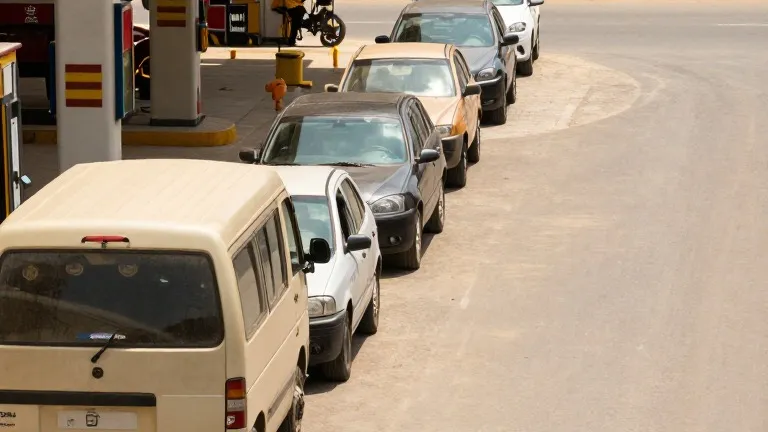
Sudan’s fuel shortage has forced a 40% increase in intercity bus fares, leaving commuters with less income and drivers working longer hours for less profit.
The war between the Sudanese Armed Forces and the Rapid Support Forces, which began on April 15, 2023, disrupted oil production. The World Bank reported that attacks on the Balila oil field halted supplies to the Khartoum refinery, a facility that previously met 60% of the national demand for petrol and liquefied petroleum gas. The Ministry of Energy and Petroleum valued these war-related losses at $20 billion last year. With domestic output down, the country now relies on imports, but new government rules require importers to deposit 200kg of gold in the Central Bank and own storage facilities. These requirements have caused some importers to exit the market, reducing supply relative to demand.
In Port Sudan, Azhari Mohamed, a 60-year-old minibus driver, spends three gallons of petrol daily, costing 105,000 Sudanese pounds. Because fuel is scarce, he works two days and spends a third waiting in lines that can last over five hours. After paying for fuel, he keeps about 50,000 pounds a day to support his family. In Gazira State, a gallon of petrol costs 40,000 pounds, while in Port Sudan it is 35,000 pounds. The Transport Chambers Union raised minibus fares by 30% this month in response to these operating costs.
Passengers face steep costs as well. Aziza Ibrahim, a 38-year-old cleaner in Port Sudan, now spends 11,000 pounds on daily transport, nearly half of her 400,000-pound monthly salary. She has reduced her work schedule to three days a week to manage the expenses. Her commute used to cost 700 pounds before the war. She sometimes borrows money to get to work and repays it when she is paid. The UN Development Programme states that average incomes in Sudan have fallen to levels last seen in the 1990s.
Businesses are also absorbing the costs. Ahmed al-Haj, a trader in Omdurman, said moving a tonne of goods now costs 30 to 50 percent more due to higher diesel and petrol prices. Local deliveries that previously cost 5,000 pounds now run between 10,000 and 12,000 pounds. When power cuts force him to use a generator, his daily expenses rise further. He said transport workers are making fewer trips, causing goods to pile up at his premises.
Economic analyst Sidi Ohaj said government import rules have worsened the shortage. He added that drone attacks on infrastructure and the war between the United States and Iran are disrupting global energy markets. He urged the government to ease import procedures urgently.
The shortage has made daily operations difficult for workers and businesses across the country. Drivers are waiting longer for fuel, and passengers are paying more to travel. Traders are passing higher transport costs on to consumers. The war continues to affect the economy through reduced oil production and higher global fuel prices.
Source: Al Jazeera