
Tennessee Execution Team Faces Severe Criticism
Medical specialists label the failed lethal injection of Christa Pike as a series of glaring professional errors that defy standard hospital protocols.
By Benjamin Rousseau ·
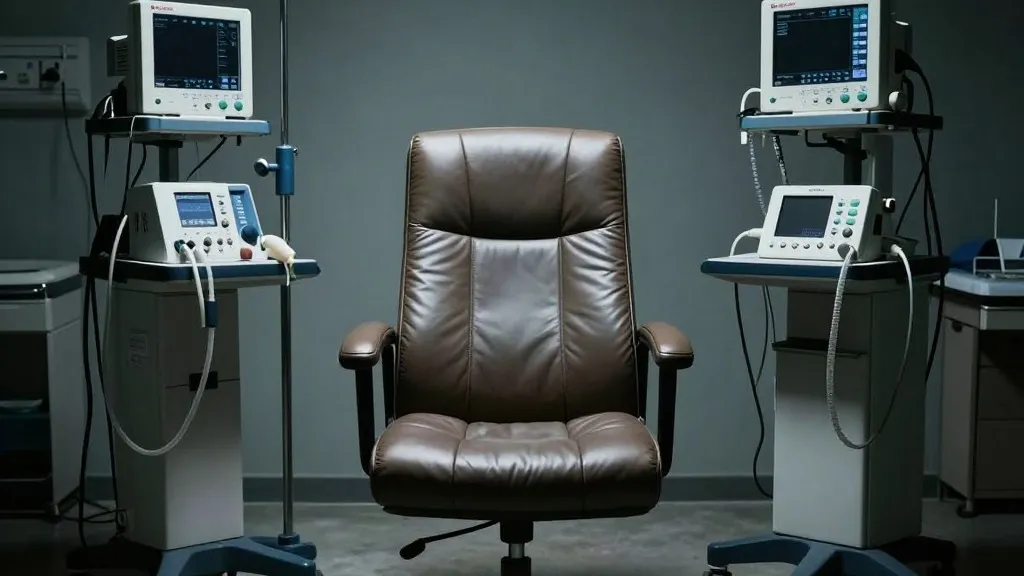
The US capital punishment system relies heavily on a specific medical protocol, yet recent events in Tennessee have exposed significant operational flaws in its execution. Following a failed attempt to put Christa Pike to death on 30 September, a coalition of medical professionals has issued sharp criticisms regarding the competence and decision-making of the state’s execution team. These specialists argue that the sequence of events described in recent legal filings would be classified as medical malpractice in any standard clinical setting, highlighting a disconnect between legal procedure and medical reality.
The core of the criticism centers on the physical difficulty the team encountered in administering the sedative. Legal records reveal that four unidentified staff members spent nearly an hour attempting to secure an intravenous line in Pike’s arms. During this period, the team reportedly used approximately ten different needles without success. Experts noted that the protocol called for a total of 5g of pentobarbital to be delivered, a volume that requires a robust vascular pathway. The struggle to establish this connection raised immediate alarms among observers who monitor the financial and operational costs of state executions.
A specific incident involving equipment choice drew particular scrutiny from anesthesiology experts. At 7:05 pm, a team member requested a 24-gauge needle, a caliber typically reserved for infants or small children. Joel Zivot, a professor of anesthesiology and surgery in Atlanta, testified that pushing the required 50cc volume of drug through such a small catheter is mechanically improbable without causing the vein to rupture. This technical mismatch suggests a lack of basic understanding regarding the physics of fluid delivery in a high-stakes environment. The team’s inability to manage this equipment effectively is viewed as a significant operational oversight.
The use of ultrasound technology to locate veins added another layer of professional concern. Jonathan Groner, an emeritus professor of clinical surgery at Ohio State University, pointed out that mastering this technique requires extensive training and dozens of supervised procedures. The execution team appeared unfamiliar with the device, leading to a slow and uncertain process. By 7:23 pm, saline was pushed through the line with noticeable difficulty, a sign that Groner described as a warning signal. Despite this friction, the team declared the line ready for the caustic drug just one minute later, a move that defies standard clinical caution and risk management principles.
Pike, who was sentenced for a 1995 murder, survived the procedure and was returned to her cell after ten days in a hospital, where she initially required a ventilator. Her legal team had previously warned state officials about her small and fragile veins based on expert medical opinion. These warnings were reportedly ignored, leading to the current situation where Tennessee has paused all executions pending a comprehensive review. The incident has triggered a broader national discussion about the viability and cost of the death penalty as a state expenditure.
The case has forced a re-evaluation of the resources allocated to capital punishment. Both Groner and Zivot emphasized that the incident reflects deeper systemic issues in how lethal injection is managed. They argued that the process prioritized speed and legal finality over medical safety and accountability. As states look at their budgets and operational standards for executions, the Pike case serves as a costly reminder that technical expertise is a necessary component of the legal machinery, not an optional extra.
Source: The Guardian
More Business · World news · Watch Your Wallet · Report a business · Got a Story?