Tesla Defers Unsupervised FSD to 2027, Limiting Use to Robotaxi Zones
Tesla’s AI chief clarified that unsupervised driving will initially be restricted to specific managed fleet areas rather than allowing owners to drive anywhere.
By Michael Lombardi ·
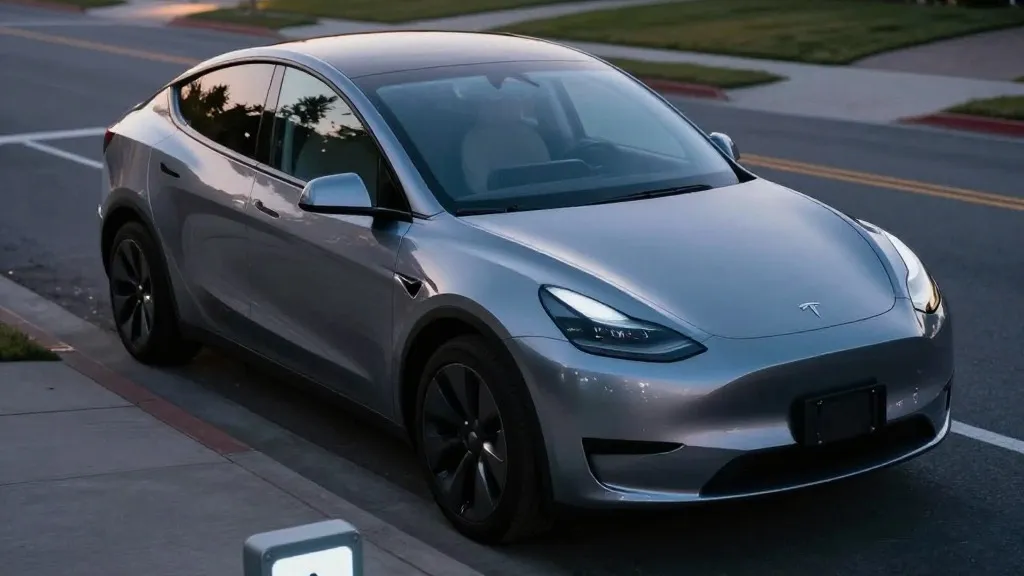
Tesla has officially pushed the timeline for unsupervised Full Self-Driving in customer-owned vehicles to the second quarter of 2027.
During the company’s Q3 2026 earnings call held today, AI chief Ashok Elluswamy provided the update in response to a question submitted by retail shareholders holding approximately 1.1 million shares. The query asked when consumers could expect unsupervised FSD in their personal cars. While the date represents another milestone in a promise first made by CEO Elon Musk nearly a decade ago, the specifics of the rollout suggest a significantly narrower scope than previously marketed.
Elluswamy described the upcoming feature not as a software update that allows owners to travel anywhere without supervision, but as a mechanism for owners to add their vehicles to Tesla’s managed Robotaxi fleet. Under this model, a customer’s car would only be capable of driving itself unsupervised within the specific geographic zones where Tesla’s Robotaxi service is already operational. This marks a distinct shift from the original pitch, which suggested that a software update would eventually enable a car to drive its owner to any destination.
The current footprint of Tesla’s Robotaxi service is limited to six US metropolitan areas. However, the service areas within these cities cover only small, specific slices of the geography. For instance, the Miami zone primarily encompasses West Miami and a strip extending toward Doral and Sweetwater. Similarly, the Orlando and Tampa zones, which launched in July, utilize comparable small geofences. Within these boundaries, the service generally avoids highways and sticks to low-speed routes, bypassing the more complex driving environments found in other parts of the cities.
Regulatory hurdles further complicate the picture. In the San Francisco Bay Area, the service is not yet unsupervised. California regulations require a safety driver in every vehicle unless the company releases specific data to the California DMV, a step Tesla has avoided to remain below the classification of a level 2 autonomous system. Consequently, the expansion of unsupervised driving depends heavily on these regulatory and safety milestones.
The scale of the current fleet remains modest. Tesla reported that its Robotaxi program reached nearly 2 million cumulative unsupervised miles by the end of the third quarter, one month after the Cybercab joined the Austin fleet. Third-party tracking data from earlier this year indicated that the number of fully driverless Teslas on the road numbered in the dozens. This figure is significantly lower than the hundreds of thousands of vehicles Musk has previously cited. In comparison, competitor Waymo had already established a presence in both Orlando and Tampa before Tesla’s entry and has accumulated over 3 million miles of autonomous driving.
Elluswamy identified safety as the primary bottleneck for the rollout, noting that Tesla currently limits operations to low-speed roads and simpler environments. He estimated that these safety issues could be resolved by next year, though he acknowledged uncertainty regarding the exact timeline. The delay to Q2 2027 follows a series of shifting dates, including a July 2025 statement by Musk that unsupervised FSD would be available for personal use in certain geographies by the end of that year. A year prior to that, Musk had expressed surprise if the technology was not ready the following year. Additionally, owners of vehicles equipped with the HW3 computer have been informed that their hardware cannot support unsupervised FSD, with no clear upgrade plan currently in place.
For shareholders and customers, the move represents a change in the product definition. Rather than a car that drives anywhere, the immediate offer is a vehicle that functions as a Robotaxi within a controlled, small geofence managed by Tesla. This excludes long-distance highway trips, cross-town airport runs, and unsupervised commutes unless the driver’s daily route falls entirely within one of the designated zones. As of today, Tesla’s roadmap remains contingent on achieving higher safety standards before expanding beyond these initial, limited boundaries.
Source: Electrek · original report published