Turkey shifts Kurdish leader Ocalan to new prison wing
The relocation of Abdullah Ocalan marks a tangible step in the ongoing peace negotiations between Ankara and the Kurdistan Workers' Party.
By Benjamin Rousseau ·
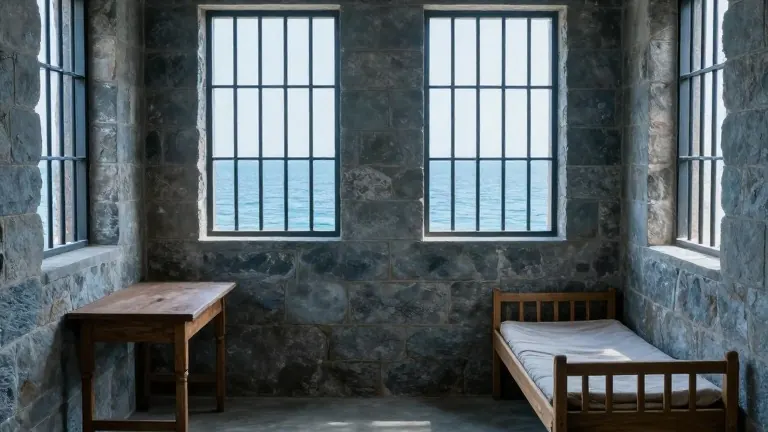
Turkey transferred Abdullah Ocalan, the leader of the Kurdistan Workers' Party, to a newly constructed section of the Imrali Island prison. The move, confirmed by senior Kurdish official Mithat Sancar, is part of Ankara's ongoing effort to resolve a 42-year conflict with the militant group.
Ocalan has been held in the penitentiary on Imrali Island in the Marmara Sea since his capture in 1999. Improving his detention conditions has long been a central demand from Kurdish negotiators. While Sancar did not explicitly confirm that the new wing offers superior accommodations, his comments suggested that the upgrade is a fact.
Sancar, a lawmaker for the pro-Kurdish DEM Party, spoke in a Saturday interview with Medya Haber TV. He urged for a faster pace in the peace talks, noting that the process has been on pause for the past two months. He stated that the physical relocation of Ocalan necessitates an acceleration of negotiations.
The conflict, which has claimed tens of thousands of lives since 1984, has seen major shifts in recent months. In February 2025, Ocalan called on the PKK to disband and disarm. By May 2025, the group announced it would lay down its weapons and end hostilities.
Following the PKK's declaration, the Turkish parliament approved legislation in August granting a conditional pardon to thousands of fighters. President Recep Tayyip Erdogan signed the bill into law, formalizing the legal framework for the ceasefire.
Sancar emphasized that Ocalan must remain the central coordinator for peace efforts. He argued that the process cannot rely on unilateral expectations from the Turkish government. He called on Ankara to move away from what he described as an insistent and rigid stance.
The relocation places renewed pressure on both sides to finalize terms. Ocalan, who co-founded the PKK in the 1970s, remains a pivotal figure for Kurdish communities and a key actor in the diplomatic track.
Source: Greenwich Time