1,000 Songs in Your Pocket: The 25-Year Legacy of a 5GB Revolution
A quarter century ago, a $399 device with hard drive storage transformed how consumers carried their music libraries, challenging industry giants with a sleek, pocket-sized design.
By Amira Patel ·
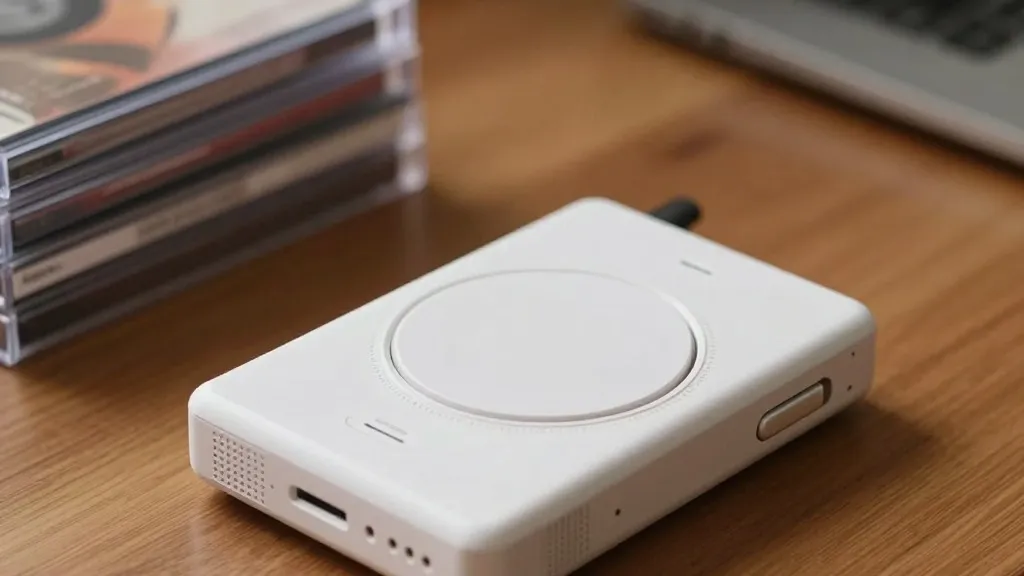
Twenty-five years ago this week, a fundamental tension in the consumer electronics market came to a head: portable music players existed, but none felt right. On October 23, 2001, Apple CEO Steve Jobs stepped onto the stage to resolve this friction. He introduced a device that promised to solve the capacity problem plaguing the industry at the time. The original iPod was not just another gadget; it was a declaration that a pocket-sized player could hold an entire musical life. The core promise was simple and aggressive: 5GB of storage, enough for 1,000 songs, available for $399.
The timing of the launch was critical for the Cupertino-based company. Apple had recently navigated a difficult period following the dot-com bubble burst. However, the company’s fortunes were rising thanks to the success of the iBook and iMac lines. Jobs positioned the Mac as the central hub for a digital lifestyle, connecting cameras, camcorders, and players. He saw a massive, untapped market in portable music, noting that while competitors like Sony, Creative, and Sonic Blue had products, none had found the correct recipe for digital music. Apple chose to enter the market using hard disk-based technology, which offered significantly more space than the flash memory players available at the time.
The physical design of the device was a direct response to the need for portability. The iPod measured 2.4 by 4 by 0.78 inches and weighed just 6.5 ounces. This made it roughly the size of a standard deck of cards. The compact form factor was enabled by a 1.8-inch hard drive from Toshiba that was only 0.2 inches thick. Jobs emphasized that the device was lighter than most cell phones of the era. The sleek exterior featured minimal sides and a durable build, aiming to bring Apple’s legendary ease of use to a portable format. The interface relied on a scroll wheel with a piezoelectric clicker, allowing users to navigate by artist, playlist, or song with one hand.
Connectivity was the third pillar of the device’s appeal. The original iPod was marketed as the first music player to support FireWire 400. This connection offered a stark contrast to the USB standards of the day. Jobs claimed that transferring a full CD of MP3s to the iPod took five to 10 seconds. By comparison, the same transfer over USB would take about five minutes. Filling the device with 1,000 songs required only 10 minutes on the FireWire connection, whereas a USB-based player would take five hours. This speed was a major differentiator, ensuring that users did not spend hours waiting for data to sync.
Powering the device was a rechargeable lithium-polymer battery that provided 10 hours of continuous playback. Apple stated that the battery could be recharged to 80 percent capacity in just one hour. The launch also coincided with the release of iTunes 2, which introduced features like MP3 CD burning. A key innovation was the Auto-Sync feature, which kept the user’s library on the Mac synchronized with the portable player automatically. During the unveiling, Jobs demoed the device with the song Building a Mystery by Sarah MacLachlan.
The impact of the original iPod on the music industry was profound, though its lifespan was finite. The device sat alongside the iPhone, which launched in 2007, for over a decade. However, as smartphones matured, the dedicated music player became less essential. The final model, the 7th-generation iPod Touch, was released in May 2019. The product line was left unmaintained for a few years before being officially discontinued in May 2022. Looking back, the 25-year anniversary highlights how a single product defined an era of personal digital media.
Source: Tom's Hardware · original report published