After Seven-Year Wait, Tesla Scraps Cybertruck Plans for Australia and New Zealand
Reservation holders in the region are receiving refund notices after years of uncertainty, marking a significant retreat for the electric pickup's international reach.
By Amira Patel ·
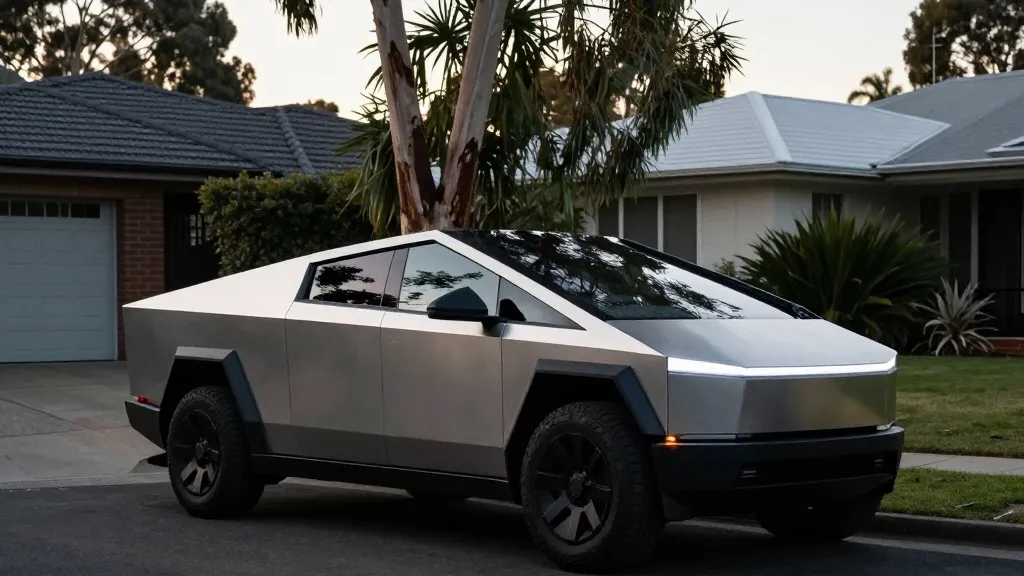
For nearly seven years, drivers in Australia and New Zealand held out hope for a futuristic electric pickup, only to see those expectations shattered today. Tesla has officially ended its plans to bring the Cybertruck to the region, leaving thousands of reservation holders with voided orders and a long-awaited refund.
The news arrived via email this morning, informing customers that their deposits will be returned. For those who began the process in November 2019 with a A$150 reservation fee, the wait has been a long one. The message from the company is blunt: after careful consideration, production of the Cybertruck for these markets has been discontinued, meaning their reservations can no longer be fulfilled.
Tesla is not leaving customers empty-handed, however. In addition to the full refund, which will be processed within 30 days, the company is offering a sweetener for those willing to switch vehicles. Reservation holders who place an order for a new Model 3 or Model Y will receive a free one-year subscription to FSD (Supervised). It appears Tesla is attempting to convert lapsed interest in a truck into sales of sedans and SUVs that it already manufactures in right-hand drive configurations.
This decision comes just a day after Tesla reported its earnings for the third quarter of 2026. The timing suggests a strategic pivot, moving away from markets that require significant re-engineering for a vehicle that is facing stiff competition and shifting demand dynamics in its home territory.
Australia was never a negligible market for Tesla. Early surveys in 2020 indicated it was the third-largest reservoir of Cybertruck interest globally, trailing only the United States and Canada. While Tesla never confirmed exact regional figures, industry tracking estimated total reservations at around two million by 2023. Despite this initial enthusiasm, the company quietly closed the Australian reservation page in May 2022, replacing it with a simple "Get updates" button without refunding anyone at the time.
The uncertainty persisted for years. In 2024, a Cybertruck was shipped to Australia for a display tour, and CEO Elon Musk told shareholders that certification for other markets might happen "next year." That promise did not materialize. The fundamental obstacle has always been the vehicle's design: the Cybertruck is built exclusively in left-hand drive. To sell in Australia and New Zealand, the truck would require a right-hand-drive version and certification under local design rules, a costly undertaking for a vehicle already grappling with demand issues in North America.
Tesla’s recent international launches have followed a clear pattern: they have targeted left-hand-drive markets only. Deliveries began in South Korea late last year and the UAE in January, with configurators opening in the Middle East. The truck remains blocked in the European Union largely due to pedestrian safety concerns. Given that Tesla delivered just 8,295 "Other Models" in the third quarter of 2026, a category now dominated by the Cybertruck, the sales volume does not justify the expense of re-engineering the vehicle for markets with a combined population of roughly 33 million.
At current sales rates, estimated at 7,000 to 8,000 units per quarter, the Cybertruck is operating at roughly 30,000 units annually, far below the production line's capacity of 250,000. For many Australian customers, the truck that arrived in the U.S. was already different from what they had reserved, often costing more and offering less range. With U.S. sales declining significantly since 2024, paying a premium for an import-ready version was becoming a difficult sell.
This cancellation confirms that the Cybertruck is becoming a niche, primarily American product. Tesla’s strategy appears to be shifting toward selling existing left-hand-drive inventory to international buyers rather than investing in new local adaptations. For now, the deposit is back, but the dream of owning a Cybertruck in New Zealand or Australia has effectively ended.
The move underscores the broader challenges Tesla faces in balancing its ambitious product lineup with the financial realities of global logistics and certification. As the company looks forward, the focus remains on volume sales of its core models, while the Cybertruck settles into a more specialized role in the global EV landscape.
Source: Electrek · original report published
More Business · Watch Your Wallet · Report a business · Got a Story?