Eisenkot pushes 58-seat minority government as bloc splits
Eisenkot targets 58 seats to form a minority government, but Bennett and Liberman oppose the plan.
By Michael Lombardi ·
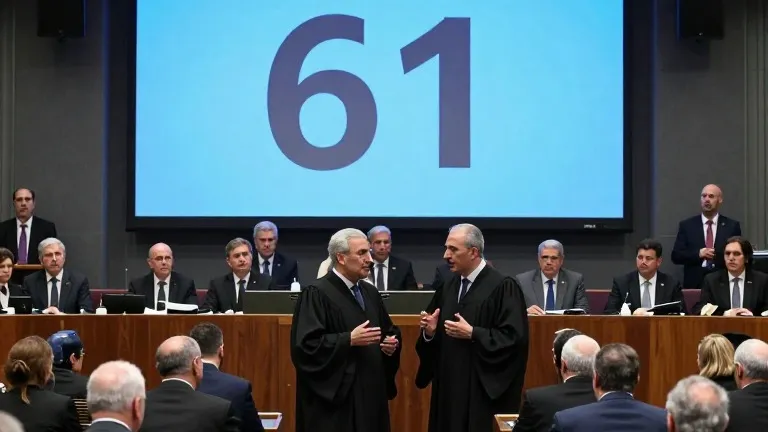
Eisenkot has proposed a minority government if the anti-Netanyahu bloc secures 58 or 59 seats in the next election. This would allow the bloc to form a government after a confidence vote, even without permanent backing from 61 MKs, and then try to widen its parliamentary base. The plan hinges on the possibility of a minority government, though some party leaders remain skeptical. Most polls show the anti-Netanyahu bloc ahead, but they still fall short of the 61 seats needed for a majority under current agreements. The electoral threshold could shift the seat distribution, and a small number of votes might decide the outcome.
The bloc is also nearing agreement on replacing Knesset Speaker Amir Ohana before any coalition deal is struck. Eisenkot wants to lead the bloc and be its main candidate to form the next government. He rejects serving under Netanyahu, even in a rotation arrangement. However, two key figures in the bloc, Naftali Bennett and Avigdor Liberman, oppose the idea of a minority government, even a transitional one. They insist on a Zionist majority from the start.
Bennett and Yair Lapid, who head the Beyachad list, also demand a Zionist government and refuse to rely on the votes or abstentions of Arab parties. A meeting between Eisenkot and Liberman this week ended with a joint call to raise voter turnout but did not settle their disagreement. Leadership rivalry continues, with Eisenkot hoping to head the largest party and Bennett viewing himself as a natural candidate because of his experience as prime minister.
The bloc also wants to advance a state commission of inquiry into October 7, changes to conscription law, limits on the prime minister's tenure, and repeal of some of the outgoing government's judicial changes. No consensus candidate has been announced for the new Knesset speaker, but the bloc sees replacing Ohana as a step that could come before any government is formed. Obstacles remain, as not every bloc member backs every judicial change, and a new speaker would not automatically deliver a legislative majority.
The memory of the Bennett-Lapid government, which collapsed before completing promised laws, also looms over the effort. Laws aimed at Netanyahu could face constitutional hurdles, and some party leaders remain skeptical of the minority government plan. The electoral threshold could shift the seat distribution, and a small number of votes might decide the outcome.
Source: The Jerusalem Post
More Politics · World news · Report a business · Got a Story?