Israeli Vote Tests Netanyahu's Bid to Keep Power as War Grinds On
Polls show neither bloc is positioned to clear the 61-seat threshold needed for a majority in the 120-seat Knesset.
By Amira Patel ·
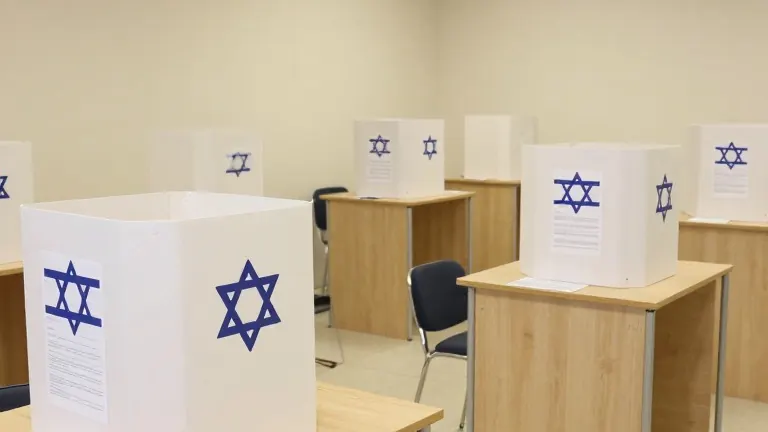
Israelis vote Tuesday with no clear path to a governing majority, as Prime Minister Benjamin Netanyahu seeks a fresh mandate while the country fights wars in Gaza, Lebanon, and Syria. Polls split on which side holds the advantage, and most do not project either camp winning the 61 seats needed to control the 120-seat Knesset. Yohanan Plesner, president of the Israel Democracy Institute, said an indecisive result is the likeliest one.
A stalemate would open several routes to a government. Lawmakers could switch sides and negotiate for weeks, or the change bloc could attempt a minority government if it holds more seats than the rival camp without reaching a majority. Arab parties could back such a government by voting for it or by abstaining. If no coalition forms, another round of voting follows.
Between 2019 and 2022, Israel cycled through five elections driven by deadlock. Plesner said that if politicians hold to their commitments and refuse to trade sides, "we will roll into another election." He added, "I'm sure that most politicians are not interested in that."
This is the first vote since the Oct. 7, 2023, attacks by Hamas, which authorities have called the deadliest day for Jews since the founding of the state in 1948. Israel has since fought in Gaza, Lebanon, and Syria, and traded two rounds of direct conflict with Iran.
Netanyahu, Israel's longest-serving prime minister and head of Likud, wants another coalition built with ultranationalist and Jewish religious parties. He tells voters he can assemble a government without Arab parties, and that the wars in Gaza, Lebanon, and Iran require more time to finish. President Trump endorsed him last week, saying, "If Israel has the wrong Leader, which would be anyone other than Bibi, America will have to do this work ourselves, and I am not inclined to do so." Netanyahu has since cast himself as the leader who can work with Trump to keep Iran from a nuclear weapon.
The opposition, called the change bloc, groups Arab, right, left, and center parties that share one aim: removing Netanyahu. Former military chief Gadi Eisenkot leads the centrist Yashar party and is the front-runner to head that bloc. He served in Israel's war cabinet during much of the first year of the Gaza war and lost a son and two nephews serving in Gaza. He has called for a state inquiry into the intelligence and security failures before Oct. 7, a review Netanyahu has blocked. On Monday, Eisenkot accused Netanyahu of "relying on a campaign of fear-mongering, lies, and threats," adding, "This time, it won't work for him."
Turnout among Arab Israelis, about 20% of the population, could move the result. Plesner said, "The higher the Arab turnout, the less likely that Mr. Netanyahu, within the current coalition, can form another government." Jehad Abomoch, a cafe owner in Baqa al Gharbiya, said many Arab Israelis see no hope or future under Netanyahu.
Two new parties sit near the threshold for winning seats, and either crossing it could alter coalition math. Both press for ultra-Orthodox men to serve in Israel's mandatory military service, an issue inside Netanyahu's own coalition. Election results are due Tuesday, with coalition talks to follow if no side reaches a majority.
Source: CBS News