Chesapeake Bay misses 2025 cleanup deadline, EPA takes no action
Pollution levels in the bay remain high as federal oversight is dissolved under a new executive order.
By Michael Lombardi ·
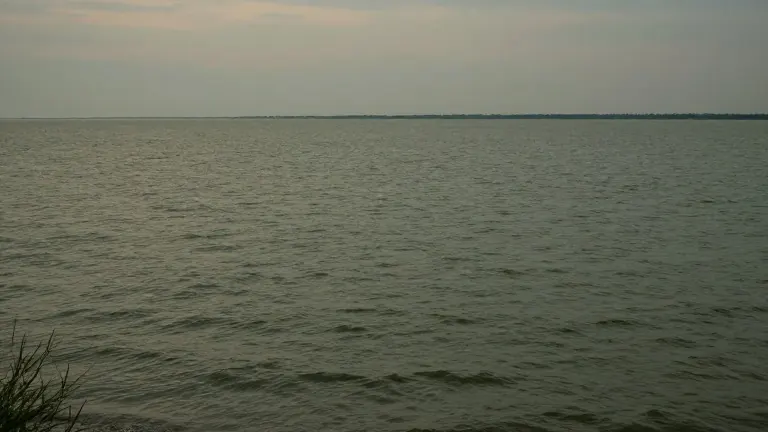
The Chesapeake Bay missed its 2025 deadline to reduce pollution levels mandated by federal law. The Environmental Protection Agency (EPA) did not impose penalties on the states for this failure. This marks the second time the states have missed a critical milestone in a cleanup plan established in 2010.
In 2010, federal courts ordered the EPA to enforce strict Clean Water Act requirements on the bay states. The agency required the states to cut nitrogen, phosphorus, and sediment levels. The states had until 2025 to meet these targets, with 60% of the reductions due by 2017. Despite the deadline passing in 2025, the EPA allowed the states to continue without facing funding cuts or permit refusals.
Gerald Winegrad, a former Maryland state senator, stated that the EPA and bay states engaged in a campaign to mislead the public about the bay's health. A recent report from the University of Maryland Center for Environmental Science rated the bay's health at 56%, or a C+ grade. Winegrad argued that this score ignores the fact that states only achieved 57% of the required nitrogen reductions.
Current data shows that 70.6% of the bay's waters are impaired. This is a slight improvement from 73.5% in 1985, but Winegrad noted that the amount of unhealthy waters actually increased in the 2025 evaluation. He described this as a marginal improvement achieved through a new, weaker bay agreement that postponed key measures until 2040.
President Donald Trump signed an executive order on Sept. 17 to revoke a 2009 order from the Obama administration. This move dissolved the coordinated federal agency leadership for the Chesapeake Bay cleanup. It scrapped the multi-agency oversight framework that had managed the restoration efforts for nearly two decades. Maryland’s congressional delegation and Gov. Wes Moore condemned the repeal, warning it threatens decades of collaborative progress.
At the signing of the order, Trump criticized local efforts to fund stormwater pollution control with fees. He referred to these fees as “rain taxes” and directed federal agencies to discourage their use. The executive order effectively ends the centralized federal approach to the bay's restoration.
Recent polling indicates that environmental issues are no longer a top concern for voters. A national poll found that only 1% of voters listed climate change as their most important issue. In local county polling, 35% of residents cited the economy as their top priority, while 23% cited taxes. No other environmental issue appeared in the top priorities list.
Winegrad, who represented the greater Annapolis area in the Maryland legislature from 1978 to 1995, said he is pessimistic about the bay's future. He noted that conservation groups have failed to escalate their issues to voters. The EPA and states are currently negotiating a new bay agreement while existing pollution reduction mandates are weakened.
Source: The Aegis