Home Bakers Turn to Anise-Flavored Loaf for Day of the Dead
A specific recipe for Pan de Muerto outlines the labor-intensive process behind a bread that serves as a central element of Mexican memorial traditions observed this week.
By Benjamin Rousseau ·
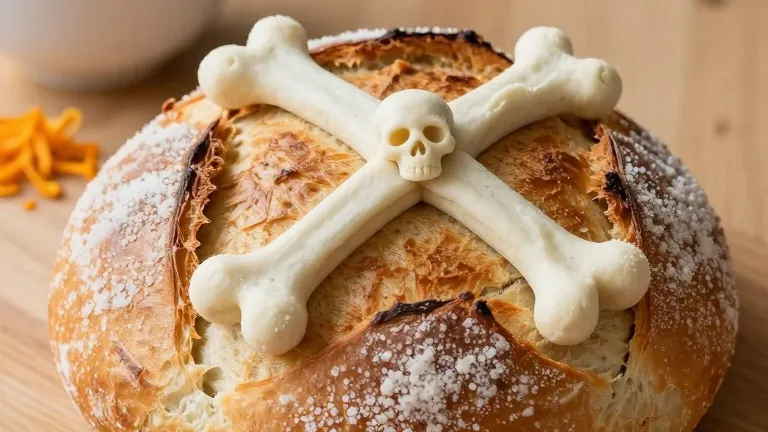
For households observing the Day of the Dead, the preparation of a specific sweet bread has become a standard ritual. The bread, known as Pan de Muerto, requires a multi-hour process involving yeast activation, kneading, and double rising before baking. The final product is brushed with melted butter and coated in sugar, serving as a primary offering on family altars.
The tradition traces back to Mesoamerican cultures, including the Aztecs, who viewed death as part of the life cycle. Families left food offerings for returning spirits. After Spanish colonization, the Church integrated these practices with All Saints’ Day and All Souls’ Day. The resulting holiday, Dia de Los Muertos, peaks on November 1 and 2.
November 1 is designated for children who have died, while November 2 honors adults. The central feature of the home altar, or ofrenda, includes marigolds, candles, incense, and the deceased’s favorite foods. The bread’s shape is specific: a round loaf topped with dough strips resembling bones and a small ball representing a skull.
Chef Walter Potenza, a contributing writer for Rhode Island News Today, published a detailed method for the bread on November 1. His recipe calls for 4 cups of all-purpose flour, 2.25 teaspoons of active dry yeast, and 1 tablespoon of grated orange zest. The dough also includes crushed anise seeds and vanilla extract, flavors that distinguish the bread from standard enriched batters.
The process begins with activating the yeast in warm milk for five to ten minutes. The dough is then mixed with flour, sugar, eggs, and butter. Potenza advises kneading the mixture by hand for 10 to 15 minutes, or 8 to 10 minutes in a stand mixer, until it becomes smooth and elastic. The dough must then rest in a warm place for 1.5 to 2 hours to double in size.
After the first rise, the dough is shaped into a round loaf. Thin strips of reserved dough are arranged across the top to form the bone and skull motifs. The shaped loaf rises a second time for 45 to 60 minutes. It bakes at 350 degrees Fahrenheit for 25 to 35 minutes until the crust turns golden brown.
Other traditional foods listed for the holiday include mole, a sauce made with chilies and chocolate, and tamales wrapped in corn husks. Families also prepare atole, a corn-based drink flavored with cinnamon or chocolate, and sugar skulls decorated with names. The meal is shared by the living after the offerings are displayed.
The holiday has spread beyond Mexico, but the core practice of using food to honor the deceased remains unchanged. The bread is typically served with hot chocolate or coffee. Its texture is described as soft with a tender crumb, and the aroma of orange and anise is a key characteristic of the finished product.
Source: Rhode Island News Today