Talmudic Debate Centers on Whether Extra Limbs Disqualify Priests
A 2,000-year-old textual dispute hinges on the interpretation of a single biblical verse describing a man with twenty-four digits.
By Benjamin Rousseau ·
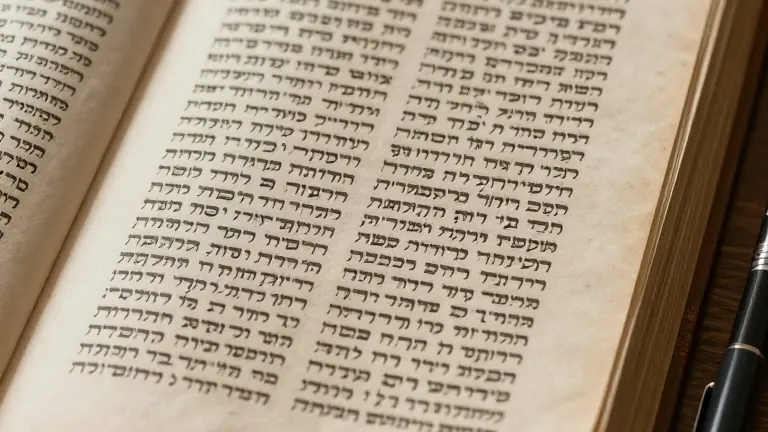
The daily Talmud study cycle, Daf Yomi, reached a passage this week that revisits a centuries-old legal dispute regarding the physical requirements for Jewish priestly service. The discussion focuses on whether a kohen with extra fingers or toes is disqualified from performing rituals. This debate centers on two opposing interpretations of a single verse in II Samuel 21:20, which describes a man with six fingers on each hand and six toes on each foot.
Rabbi Yehuda argues that this biblical figure was praised for his strength, implying that extra limbs do not invalidate a priest. The Sages counter that the text disparages the individual, suggesting the deformity is a disqualifier. This split opinion is rooted in how each side reads the scripture: one view sees a commendation of prowess, while the other sees a criticism of physical abnormality.
The Gemara records a specific anecdote involving Rabbi Tarfon to illustrate the practical implications of this debate. When a man with extra digits appeared before Rabbi Tarfon, the rabbi stated, 'May the likes of you increase manifold in Israel.' This comment reflects a positive view of the condition. However, Rabbi Yose objected, interpreting the phrase differently. He argued that Rabbi Tarfon meant the man's visibility would help reduce the number of mamzerim and nesinim in the community by making their status clear.
Rabbi Yose’s interpretation raises a specific legal question. The biblical verse cited by the Sages refers to the Giv’onim, who were nesinim excluded from intermarriage by King David. It does not explicitly mention mamzerim, who are born from illicit unions. The text explores how Rabbi Yose connects these two groups through the concept of public identification. If a mamzer’s status is easily recognized, it prevents forbidden marriages, thereby protecting the community.
The discussion expands to the legal status of a father who has produced a mamzer. The Mishna in Yevamos 22b states that cursing a father is a capital offense, but this applies only if the father is observant of Torah law. If a father committed an illicit union resulting in a mamzer, he is initially considered a sinner. However, if he repents, his status changes. The Gemara cites Shimon b. Menassiah, who noted that such a sin is 'crooked and cannot be made straight.' Despite this, repentance removes the stigma of being a sinner, making the son liable for cursing him.
Scholars offer three distinct explanations for how repentance works in this specific case. Rabbenu Chayyim argues that repentance fully eradicates the sin, but the son’s humiliation continues because the mamzer serves as a constant reminder. Rashi suggests that the sin itself remains visible in the world, but repentance is sufficient to remove the legal classification of the father as a sinner. The Kovetz He’aros explains that God usually erases sins retroactively, but here, the visible trace of the mamzer prevents full erasure, though the father is still protected from cursing from the point of repentance onward.
The final segment of the text synthesizes these views into a practical conclusion regarding public knowledge. Rabbi Yose’s position suggests that any means of publicly revealing a mamzer’s status is beneficial. By preventing the mamzer from marrying into the community, the physical sign of the father’s transgression eventually ceases to exist. This process ensures the sinner’s eventual exoneration and restores his standing as a repentant individual.
Source: The Jewish Press