MTA faces $900 million gap as watchdog urges single-operator trains
The Citizens Budget Commission links the deficit to staffing costs and recommends cutting over 1,000 positions to save $2.5 billion annually.
By Amira Patel ·
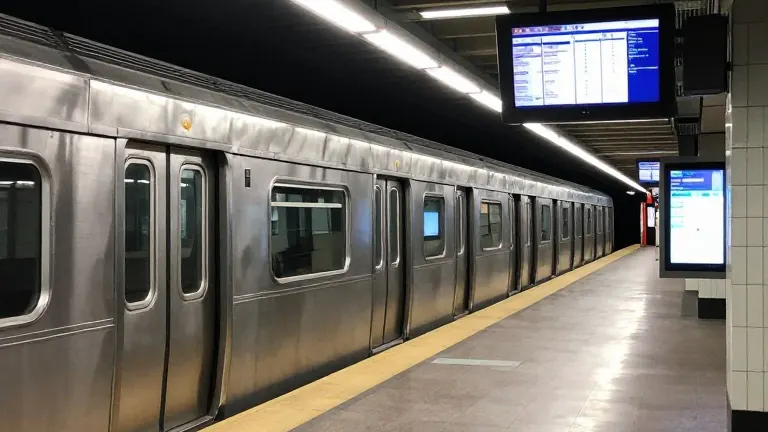
The Metropolitan Transportation Authority will face a funding shortfall of nearly $9 billion by 2030 if current spending trends continue, according to a report released by the Citizens Budget Commission.
The watchdog group identifies labor and healthcare costs as the primary drivers of the gap. The report states that the agency's expenses currently exceed revenue from fares and tolls, creating a deficit that will widen over the next four years.
To close the gap, the commission recommends reducing the number of employees required to operate subway trains. It suggests that the MTA allow trains to run with a single operator instead of two. The group argues that modern technology has rendered the second position largely obsolete.
On lines such as the L and 7, new computerized signaling systems have automated much of the operation. While the driver still manages the doors, the operator's duties are limited to pressing a button every 20 seconds to confirm alertness. The commission cites these minimal responsibilities as evidence that the role can be eliminated without affecting service.
Eliminating operator positions on the L and 7 lines alone would save $36.5 million per year. If the MTA gradually moves to single-operator service across the entire system, the annual savings would reach $500 million. The agency is currently installing new signaling equipment on the A, C, E, F, G, M, and R lines. These lines still require two crew members to operate trains.
The recommendation arrives as the Transport Workers Union Local 100 negotiates a new contract for its 40,000 members. The MTA board is expected to vote in December on a financial plan for 2027 that includes a 4% increase in fares and tolls.
John Samuelsen, president of the Transport Workers Union of America, called the proposal a familiar tactic. He stated that the agency is using projected deficits as a reason to cut costs at the expense of workers. In 2025, the state legislature attempted to pass a law requiring two MTA employees on every train. Governor Kathy Hochul vetoed the bill, leaving the door open for single-operator service in the future.
The report notes that the MTA saved $576 million this year through operational efficiencies. However, the commission argues that these savings are not enough to offset the projected $300 million deficit in the coming year. The group estimates that its full set of reforms, including higher healthcare premiums for retirees and fare collection changes, could save $2.5 billion annually.
Source: El Diario La Prensa
More Business · Watch Your Wallet · Report a business · Got a Story?