9,000 hectares of poppies leased by Afghan growers in Balochistan
Satellite data reveals a sharp rise in opium farming in Pakistan's border province as Afghan growers move across the frontier.
By Benjamin Rousseau ·
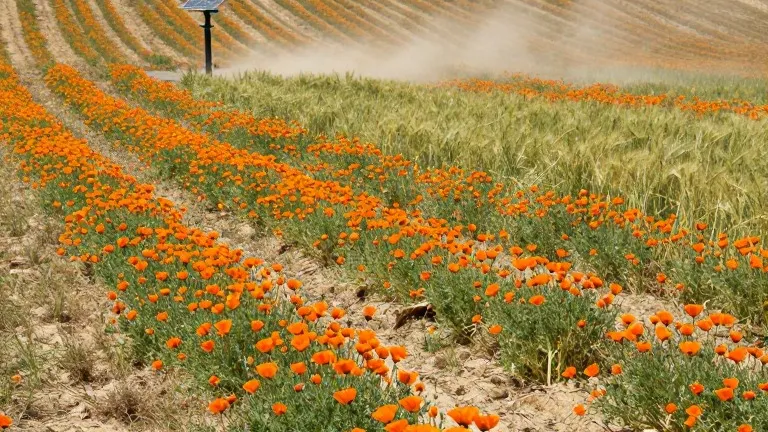
More than 9,000 hectares of poppy cultivation have been identified in Pakistan's Balochistan province, according to a new satellite analysis. The findings, released in an August report by the British firm Alcis, indicate that opium farming has expanded rapidly in the region since the Taliban banned narcotics in Afghanistan in 2022. The data marks a sharp increase from previous years and suggests the borderlands are becoming a new center for global opium production.
The expansion is driven largely by Afghan farmers from the provinces of Kandahar and Helmand. These growers are leasing land in Balochistan and bringing capital and technical knowledge with them. Lala Jan Kakar, a resident of Killa Abdullah, noted that these farmers invest millions of Pakistani rupees in infrastructure, including solar-powered wells. They share the resulting profits with local landowners. This economic incentive has led many local farmers to double their cultivated land in 2026.
Cultivation is concentrated primarily in the districts of Loralai and Killa Abdullah. Abdul Qahar Wadan, a former member of Pakistan's National Assembly from Killa Abdullah, stated that the growth is rampant and allegedly backed by senior military officials. He claimed these officials take commissions from growers. Monawar Hussain, the district's chief administrative officer, disputed this account, asserting that cultivation declined after an eradication campaign last year. However, Alcis imagery from 2026 shows no clear evidence that those eradication efforts were sustained or effective.
Farmers in the region describe a cycle of bribery and staged destruction. An anonymous grower in Killa Abdullah said bribes are paid to local authorities through intermediaries. The farmer alleged that when media attention increases, growers sometimes plant poppies on barren land specifically so officials can destroy the crop and publicize the effort. This strategy allows authorities to demonstrate action while the actual production continues elsewhere. Traditional fruit farming in the area has suffered due to insecurity, drought, and flash floods, making poppy a more lucrative alternative.
The shift is not limited to Pakistan. A similar pattern has emerged in Iran's Sistan-Baluchistan province. Afghan farmers work there as tenants and sharecroppers, often relying on family ties. Satellite imagery from 2026 shows extensive fields in the region, some equipped with drip irrigation. This costly investment suggests growers planted in late 2025 with confidence that the crop would not be destroyed. Iranian authorities have been focused on a war against the United States and Israel since late February, leaving them unable or unwilling to target the 2026 harvest.
Experts warn that the reliance on poppy monoculture is increasing. David Mansfield, a UK-based expert on Afghanistan's illicit drugs industry, described a move from mixed farming to large-scale poppy monoculture. Poppies can be harvested twice a year, providing more frequent income than other crops. Mansfield said the doubling of cultivated land in 2026 is a stark indication that much higher cultivation levels should be expected in 2027. This trend mirrors a rebound in opium production within Afghanistan itself, particularly in Badakhshan and the southwest, despite the official ban.
The economic pressure on farmers is driving this shift. In Afghanistan, drought and debt have led to protests and defiance of the ban. A recent Taliban directive barring home searches for poppy without a court order is seen as a concession to farmers. Mansfield warned that this move may signal tolerance for cultivation beyond walled compounds. If farmers interpret this as permission, Afghanistan could see a dramatic rise in opium production in 2027. The growth in drug production also fuels regional violence, as armed groups compete for tax revenues from the trade and other cross-border activities.
Source: RFE/RL