Israeli Election Stalemate: No Bloc Secures Governing Majority
Exit polls indicate a hung parliament where neither the incumbent nor the opposition can reach the 61 seats needed to form a stable government.
By Amira Patel ·
Residents of Israel faced a period of political uncertainty on Tuesday night after exit polls indicated that neither the governing coalition nor the opposition bloc has secured the 61 seats required to command a majority in the Knesset. The lack of a clear winner means that ordinary citizens will likely experience a prolonged phase of coalition negotiations or the prospect of returning to the polls, as no single side holds the decisive power to enact legislation without support from smaller parties.
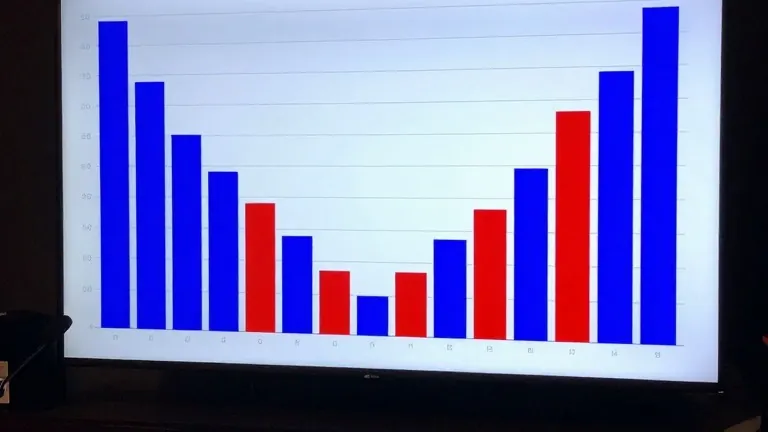
Surveys conducted by Channels 11, 12, and 13 placed the opposition bloc, which includes Yashar, B’Yachad, Yisrael Beytenu, and the Democrats, at between 50 and 53 seats. Prime Minister Benjamin Netanyahu’s bloc was projected to capture approximately 50 seats. This narrow gap leaves both camps short of the threshold necessary to form a majority government, creating a deadlock that mirrors pre-election polling trends where neither side appeared capable of crossing the line independently.
Benjamin Netanyahu’s Likud party is expected to retain its status as the largest single party with 24 to 25 seats. In the opposition camp, Gadi Eisenkot’s Yashar is projected to win between 21 and 23 seats. Other major players include Naftali Bennett’s B’Yachad, which is expected to gain 12 to 14 seats, and Yair Golan’s Democrats, projected at 9 to 10 seats. Avigdor Liberman’s Yisrael Beytenu is estimated to receive 7 to 9 seats, while smaller right-wing parties near the threshold are expected to fall short of the required 3.25% vote share.
The outcome hinges on the role of the Joint List and Ra’am, which are projected to win a combined 17 to 18 seats. While these numbers could provide the necessary arithmetic for a government, most opposition leaders have largely excluded Arab parties from potential coalitions, with the exception of Yair Golan’s Democrats. In Netanyahu’s camp, the ultra-Orthodox parties Shas and United Torah Judaism are projected to secure a combined 12 to 13 seats, alongside 6 to 7 seats for Otzma Yehudit and 6 seats for the Religious Zionist Party-Zehut.
Voter participation reached its highest level since 1973, according to Central Elections Committee records. This high turnout underscores the public engagement in the process, yet it did not resolve the structural imbalance in the Knesset. The small right-wing parties People of Israel and The Reservists-Economic party are both projected to miss the electoral threshold, further limiting Netanyahu’s options for finding additional right-leaning partners to bridge the seat gap.
Eisenkot has rejected the idea of serving under Netanyahu, including in a rotation arrangement, which makes a unity government unlikely. He has called for the leader of the largest opposition party to become the bloc’s prime ministerial candidate, though no formal agreement has been reached within the camp. The possibility of a minority government that relies on external support for confidence votes remains, but internal opposition to such arrangements may complicate the path forward.
Official results will be determined after all ballots are counted, as exit polls have varied from final outcomes in previous cycles. The current data suggests a fragmented parliament where coalition talks will be the primary mechanism for determining the next government, with the risk of a second election present if negotiations fail to produce a stable configuration.
Source: The Jerusalem Post